The backup keeps returning
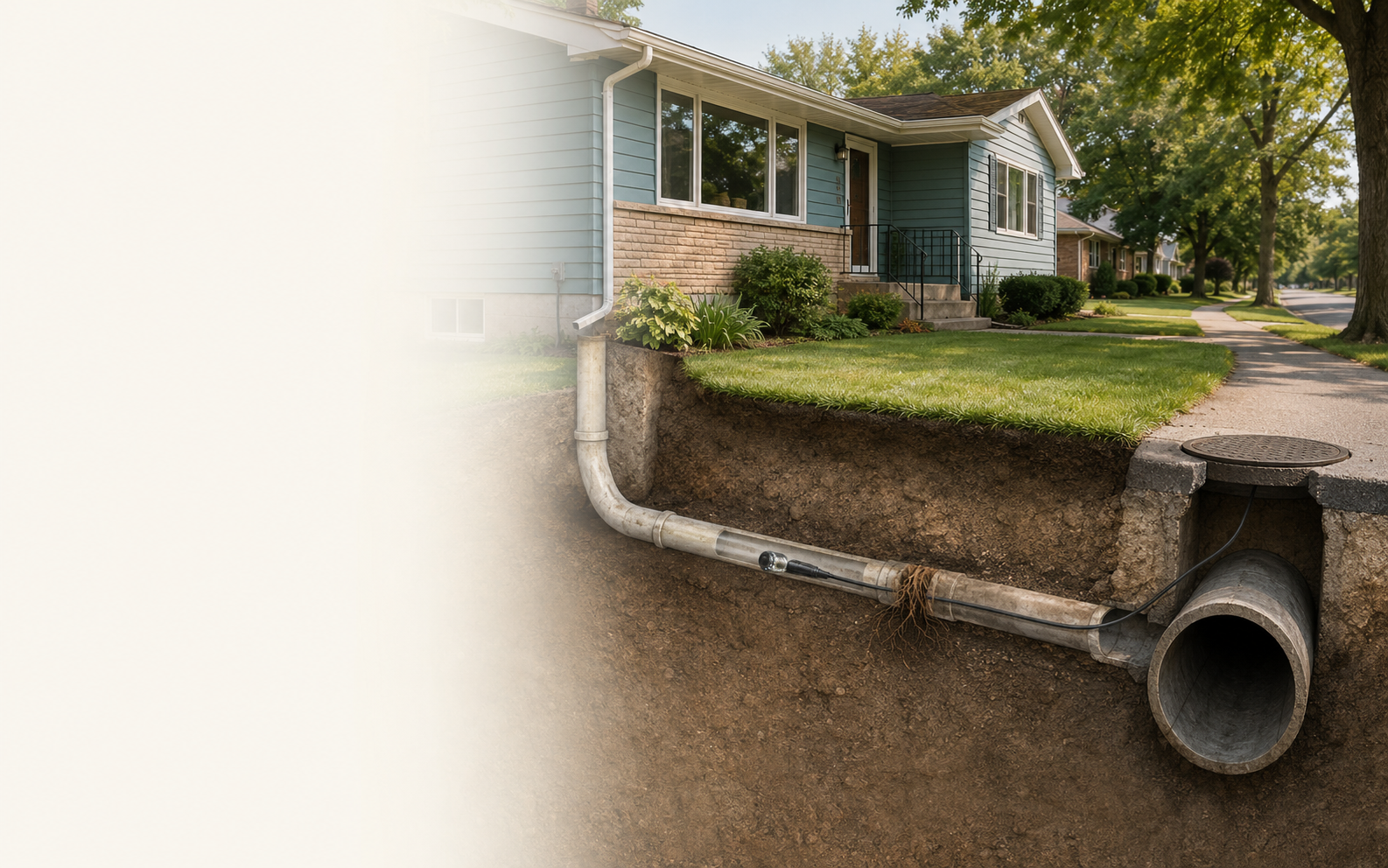
Repeated main-line backups after cleaning can indicate roots, separation, a belly, or deteriorated pipe.
Residential sewer line repair · St. Louis Park, MN
St. Louis Park, Minnesota homeowners can get help evaluating a private residential sewer line in Hennepin County, including recurring backups, camera-confirmed damage, trenchless rehabilitation, structural repair, or full line replacement.
Local sewer context
The city says much of its sewer-main system is more than 50 years old and includes clay pipe affected by cracks, tree roots, and groundwater. Its 2025–2026 rehabilitation project addresses selected public sewer-main sections and is separate from evaluating a home’s private sewer lateral.
Review the city’s sewer rehabilitation project ↗Private-line decisions
Repeated backups, recurring roots, or a camera-confirmed defect still require property-specific evidence. The inspection should identify the location and severity of damage before a homeowner compares cleaning, spot repair, trenchless rehabilitation, or replacement.
See what a sewer camera inspection can show →When cleaning may not be enough
One slow fixture usually is not a replacement lead. Repeated whole-house symptoms or camera-confirmed damage deserve a closer look.
Repeated main-line backups after cleaning can indicate roots, separation, a belly, or deteriorated pipe.
Cracks, collapsed sections, separated joints, and persistent root intrusion may require more than cleaning.
A second structural evaluation can help you understand spot repair, lining, trenchless, and replacement options.
Permanent-solution pathways
A qualified contractor should explain why a method fits the pipe, access conditions, and severity of damage.
A targeted repair may be appropriate when damage is limited to one accessible section of the private lateral.
Learn about this repair path →Lining or pipe bursting may reduce surface disruption when the existing line and site conditions allow it.
Learn about this repair path →Excavation may be necessary when the pipe has collapsed, shifted badly, or cannot support a trenchless method.
Learn about this repair path →Plan the next decision
Cost depends on the actual defect and construction conditions. Roots can be a recurring clog or evidence of a structural opening in the pipe.
See how defect location, depth, access, repair method, permits, and restoration affect a proposal.
Review cost factors →Learn when root cutting may restore flow and when recurring intrusion points to a damaged joint or pipe.
Understand root intrusion →Know what to request from an inspection before accepting a structural repair recommendation.
Prepare for an inspection →Simple and transparent
Tell us enough to distinguish a potential structural sewer project from routine drain cleaning. Then we can prepare for the right local evaluation instead of starting with another temporary fix.
See what to expect →Share the property, symptoms, and inspection history.
Routine clogs are separated from possible structural damage.
We follow up if the request fits a structural sewer-line project.
Prepare a stronger evaluation
A contractor can assess a structural sewer project more efficiently when the homeowner provides the history, inspection findings, and access conditions up front.
Record backup dates, affected fixtures, prior cleanings, root treatments, and how quickly symptoms returned.
Keep the camera video, written findings, marked defect locations, pipe material, line length, and cleanout access details.
Ask about excavation limits, restoration, permits, utility conflicts, warranty, exclusions, and what could change the final price.
Common homeowner questions
A single clog usually does not prove structural damage. Repeated whole-house backups, recurring roots, or camera evidence of cracks, separated joints, a belly, or collapse are stronger reasons to evaluate the private sewer lateral.
The City of St. Louis Park states that a single-family homeowner is responsible for the sewer service line from the home through its connection to the sewer main in the street.
No. The pipe condition, defect, access, route, and surrounding utilities determine whether lining or pipe bursting can work. A collapsed or severely deformed line may require excavation.
A camera can locate visible roots, cracks, separated joints, standing water, deformation, or collapse. The findings help a contractor decide whether cleaning, spot repair, trenchless rehabilitation, or replacement is appropriate.
St. Louis Park homeowners
Start with the symptoms. A camera evaluation determines the repair—not a webpage.